
small pools
Small backyard pool dimensions: how narrow can you actually go?
Small backyard pool dimensions: how narrow can you actually go?
Smaller than you probably think, but not as small as some builders will sell you. On a tight Austin lot, a gunite pool as narrow as 8 feet and as short as 14 feet can be genuinely usable, but only if the shape, depth, and features are designed around that constraint instead of just scaled down from a bigger pool. Below are the real numbers, what subtracts from them before you ever pick a shape, and where the line sits between "small pool" and "expensive regret."
What the city takes before you start measuring
Your backyard is not your buildable area. The buildable area is what remains after setbacks, easements, and equipment space are subtracted, and on most Austin lots that number is significantly smaller than the fence line suggests.
Setback distances vary by zoning district, lot size, and whether you back up to a neighbor, a greenbelt, or a utility easement. In most residential zones, you are looking at a required separation of several feet from side and rear property lines. A corner lot or a lot with a drainage easement can lose substantially more. Your plat survey shows the exact lines; if you do not have one, get one before you start designing.
Then subtract the equipment pad. A pump, filter, heater, and automation panel need roughly a 4-by-6-foot footprint, plus access clearance on the service side. On a generous lot that pad hides behind a fence. On a tight lot it competes directly with pool and patio space.
What is left after all of that is your actual canvas. We have had homeowners in Tarrytown and Zilker come in thinking they had 30 feet of depth to work with and discover they had 18. That changes the conversation, but it does not end it.
The real minimums for a pool that still works
Here is where most online advice gets vague. "Small" is not a dimension. These are the dimensions, broken out by what you want the pool to do.
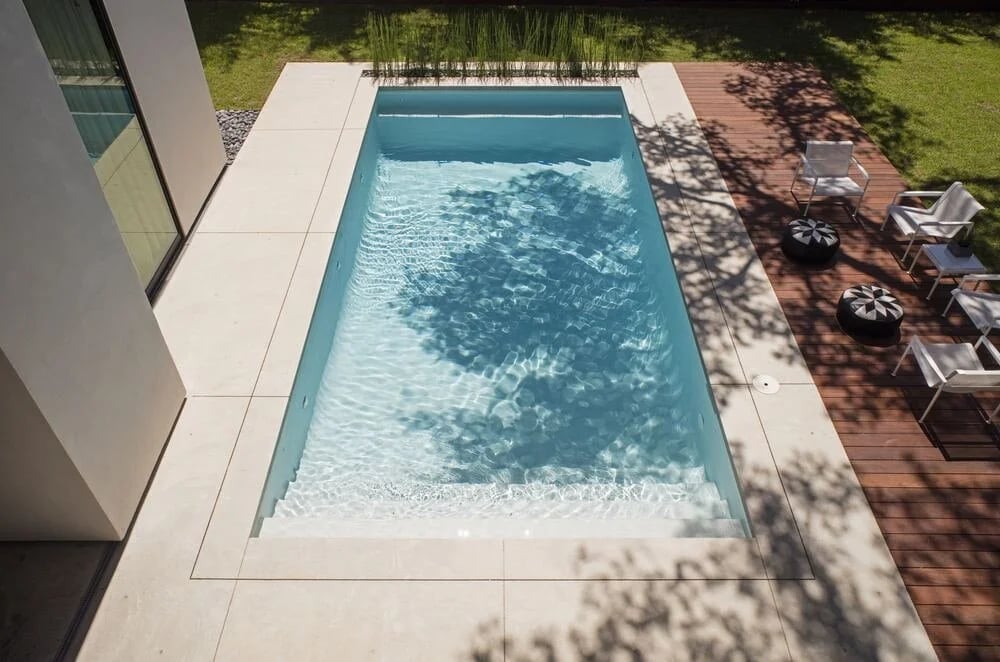
Plunge and cool-down pool
If the goal is a place to get in, cool off, and sit with a drink, an 8-by-10-foot pool at 4 to 5 feet deep is the practical floor. You are not swimming laps in it. You are not doing cannonballs. But it holds water, it looks good, and on a 105-degree Austin afternoon it does exactly what you need.
Go narrower than 8 feet and two adults cannot comfortably share the water. Go shallower than 4 feet and you lose the cooling effect that makes a plunge pool worth building.
Compact recreation pool
This is the sweet spot for most small-yard builds: roughly 10 by 20 feet, 4 to 5.5 feet deep, with a tanning ledge or bench seat on one end. Two or three people can float, kids can play, and an adult can take a few strokes. A 12-by-24-foot version of this is even better if the lot allows it.
At 10 feet wide, you have enough room for a bench along one wall and still leave open water. At 8 feet wide you do not, which is why 10 feet is the width we push toward for a pool that is meant to be more than a plunge.
Exercise or short-lap pool
For a single-lane swim, you need about 8 feet of width and at least 30 feet of length, with a flat bottom at 4 feet deep or slightly more. Anything shorter and you spend more time turning than swimming. A swim jet or current system can make a 14-to-16-foot pool feel longer, but it is a different experience than actual laps, and it adds $8,000 to $15,000 to the build.
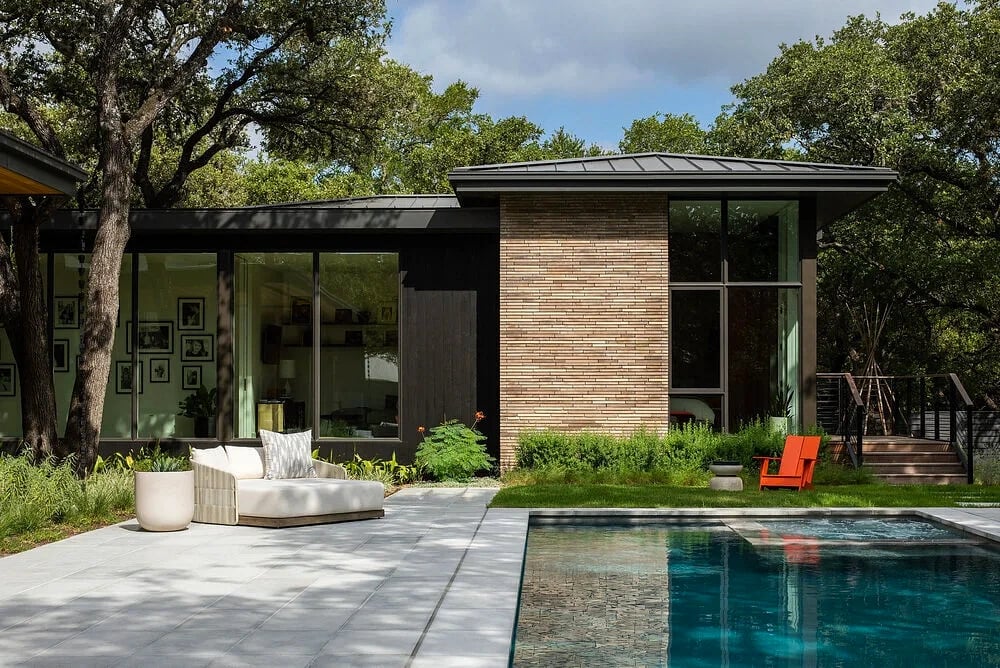
If lap swimming is the primary purpose and you have fewer than 30 feet of buildable length, a swim spa may honestly be the better call. It is not what we build, but it is the right answer for some lots.
Depth matters more than people expect
On a small pool, every inch of depth is a design decision. Go too deep and you lose shallow usable space. A 10-by-20-foot pool with a deep end at 6 feet gives you maybe 6 feet of shallow area before the floor drops away. That is not much room for a tanning ledge, a bench, and a set of entry steps.
Most compact pools work best at a single depth between 4 and 5 feet, or with a very gradual slope from 3.5 to 5 feet. Skip the deep end entirely. You gain usable space, reduce excavation cost (especially if you are hitting limestone, which you probably are west of Mopac), and the pool feels bigger than its footprint.
What a small pool should not have
This is where we talk people out of things, and it is the most valuable part of the design meeting for a small yard.
A full-width tanning ledge on a narrow pool. A tanning ledge is 5 to 6 feet deep into the pool. On a 10-by-20-foot pool, that ledge just consumed a quarter of your water area. A 2-foot-wide bench along one wall gives you the same place to sit without cutting the pool in half.
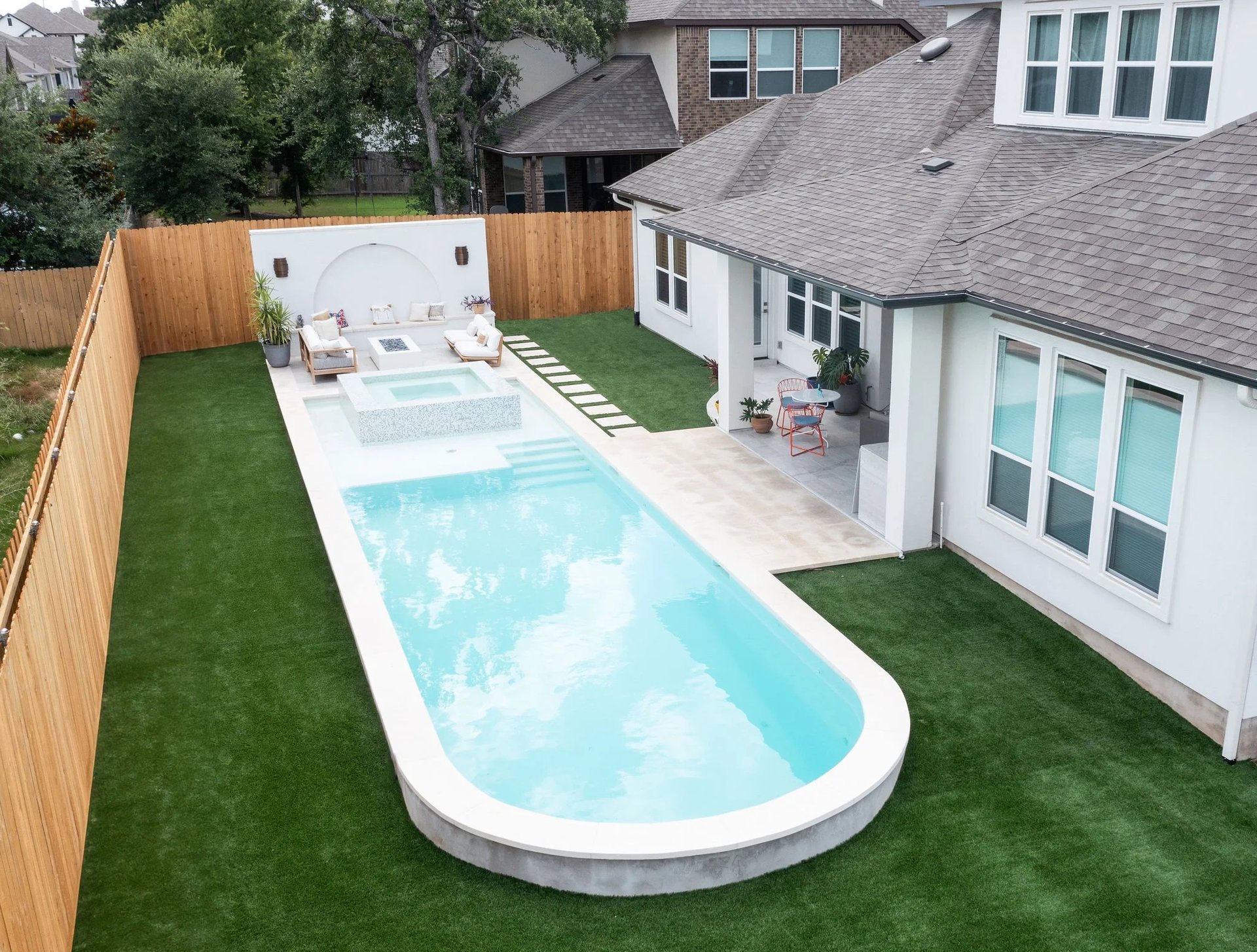
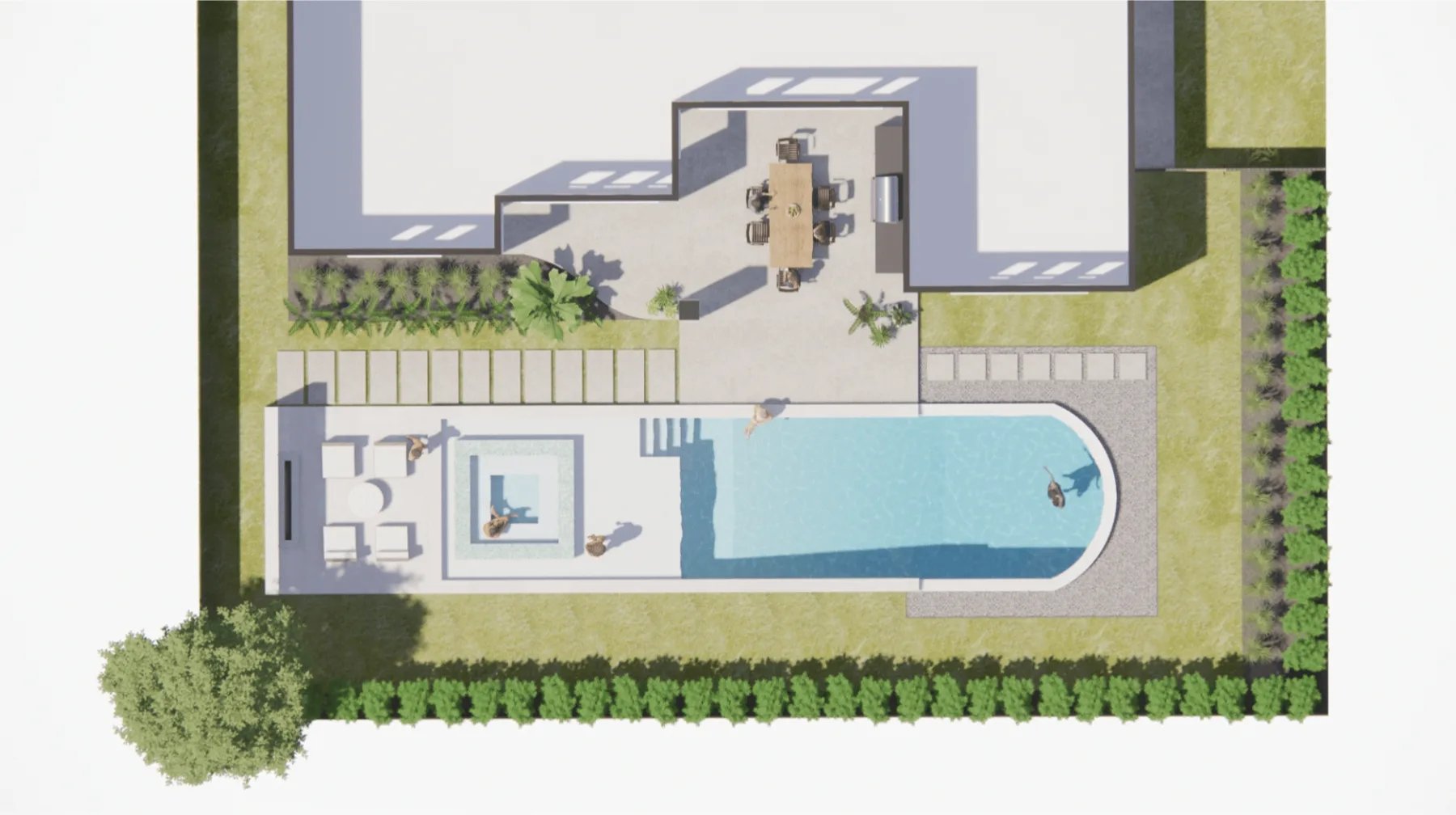
A raised spa attached to a small pool. The spa eats 6 to 8 feet of your buildable length and adds a second set of equipment. On a tight lot, a standalone spa placed separately, or built into a corner of the pool as a hot-water bench zone, works better.
Oversized water features. A 6-foot sheer descent on a 10-foot-wide pool is visually overwhelming and creates splash noise that fills a small yard. A pair of bubblers or a single scupper keeps the water moving without dominating the space.
None of these features are bad. They are bad at this scale. The same tanning ledge that makes a 15-by-35-foot pool more usable makes a 10-by-20-foot pool less usable.
What a small pool costs here
A custom gunite pool in Austin starts in the low six figures regardless of size, because the fixed costs (permitting, engineering, excavation mobilization, plumbing, equipment, plaster, tile, coping) do not scale down proportionally with square footage. A pool half the size of a standard backyard pool does not cost half as much. It typically runs 60 to 75 percent of a full-size build.
What moves the number on a small pool is the same thing that moves it on any pool here: what is under the dirt. Limestone and caliche bedrock, which cover most of the Hill Country and much of west Austin, require rock excavation. On a small lot with tight access, that work takes longer because the equipment is working in a constrained space. The pool cost and pricing guide covers the full breakdown.
Fiberglass is the other option for small pools, with installed costs typically running $60,000 to $100,000. The tradeoff is that you are choosing from manufacturer molds rather than designing a custom shape, and the smallest fiberglass shells may not fit your lot geometry the way a gunite shell built to your exact dimensions would. For more on the comparison, the pool types page lays out the differences.
How to figure out what fits your lot
Before a design meeting, three things help more than anything else:
- A recent plat survey showing property lines, setbacks, and easements. If you closed on the house in the last few years, your title company has one.
- Photos of the yard from the back door, from the fence line looking back, and from each side. Include the area where equipment would sit.
- A rough idea of what the pool is for. "Cool off after work" and "swim laps every morning" lead to completely different shapes at the same price.
With those three things, a designer can tell you in the first meeting whether your yard fits a 10-by-20, a 12-by-24, or something in between, and what you would give up to go smaller. Modern Pools runs that process through 3D pool design so you see the pool on your actual lot before anything is priced.
If you are working with a small backyard and want to know what actually fits, get in touch. The design conversation is where the real dimensions get settled.
Sources
- JDJ Consulting: What You Need to Know Before Building a Pool in Texas
- ThePoolAndLawn: What Is a Good Size Pool for a Backyard?
- Carl Shurr: Zilker Setbacks and Lot Coverage Basics
- Plungie: Small Inground Pools: Sizes, Costs & Ideas for 2026
- Longhorn Pools: Austin Pool Building Regulations: 2026 Homeowner Guide